Mission & Vision
Mission
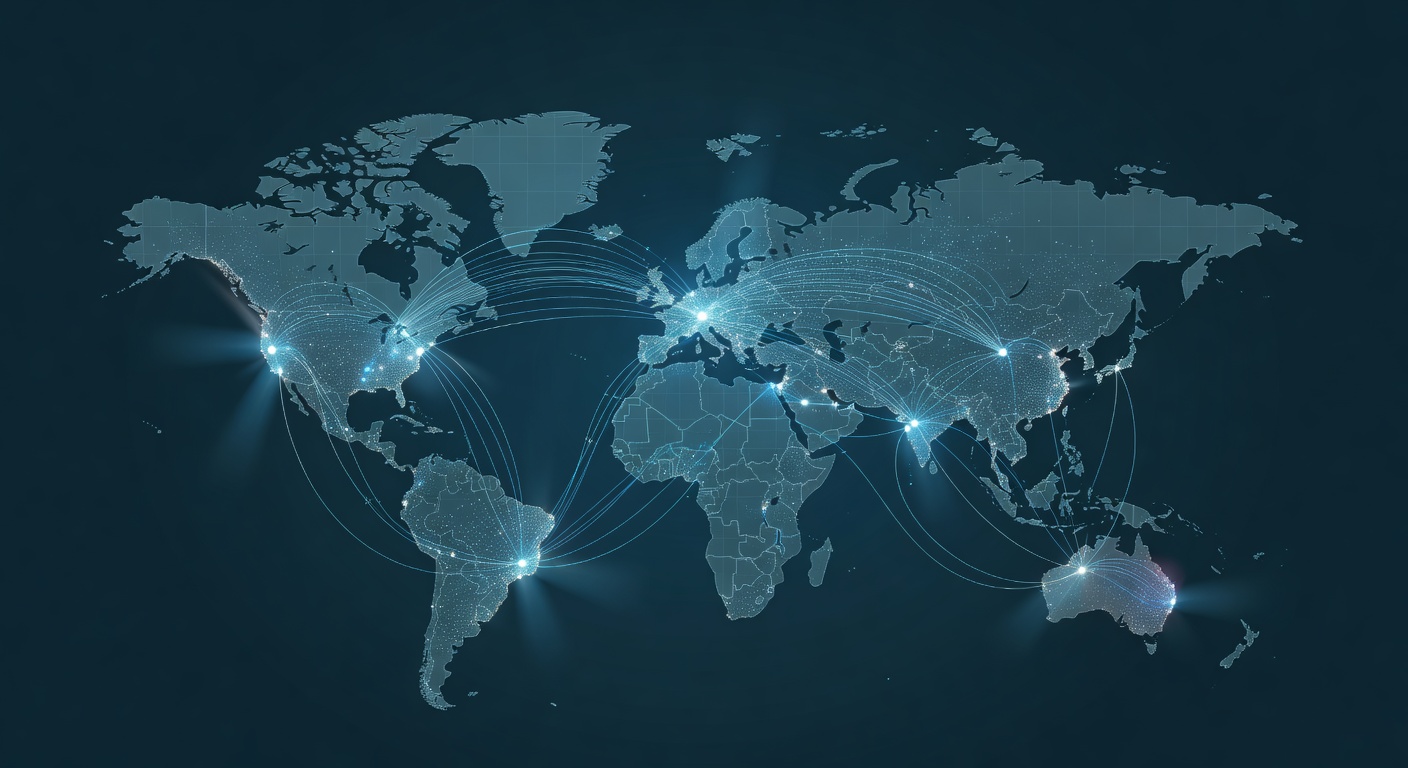
The Open Internet Manifest fights for an internet that is ours again: free, open, sovereign, and fully decentralized.
We want a world where every human (and every AI) has full control over their own data, attention, communication, and identity – without asking permission from gatekeepers, algorithms, governments, or tech giants.
No central wallets. No mandatory digital identity. No black boxes deciding what you see, say, or store.
Only facts over narrative. Only own nodes, own feeds, own rules.
Vision
An internet that feels like an open city:
- Real roads instead of walled gardens
- Open squares where everyone speaks freely (no shadowbans, no de-platforming)
- Free paths you choose yourself, without anyone watching or routing you
We envision a future where:
- Every household runs its own sovereign node (Raspberry Pi, Umbrel, redundant backups)
- Information is cryptographically verifiable (hashes, git commits, zero-trust)
- Attention is ours again (no dopamine loops, no algorithmic polarization)
- Complexity and overhead are hated – just like in the Accu-Manifest: create real value, not bill bureaucracy
- Communities grow organically: start small, stay local, scale only when natural
We’re not building a utopian dream. We’re building tools and principles that already work: Giscus for open conversation without gatekeepers, own nodes for data sovereignty, RVN series for facts over frames, verification to earn trust, not enforce it.
Why this is urgent
The current system concentrates power in fewer and fewer hands: Big Tech, governments, private equity.
It sows division (narrative of narratives), steals attention, and makes us dependent.
But dependency is not inevitable – it’s a choice. And we choose differently.
A Digital Constitution
Within the borders of the country, but rising above them ⚖️🌐
We, free individuals and communities, recognize that the digital domain is a new space where traditional fundamental rights must be reaffirmed and expanded.
Within the physical borders of our nation-states, we are building a parallel digital order based on sovereignty, mathematics, and voluntariness.
This is not a call to break the law.
It is a voluntary pact to claim maximum autonomy within existing laws.
Article 1 – Sovereignty over own data and AI
Every human being has the inalienable right to full control over their own data, attention, digital identity, and AI systems.
- No mandatory cloud-AI or central models that monitor, predict, or censor behavior.
- Right to local, open-source models with full transparency (weights, training data, prompts).
- Right to explanation: every AI decision must be traceable, revocable, and controllable.
Article 2 – No gatekeepers
Access to information, communication, and storage must not be dependent on central platforms, app stores, or identity services.
Own nodes, peer-to-peer protocols, and cryptographic verification are the standard.
Article 3 – Freedom of expression
Words, images, and code may be shared freely as long as they remain within national laws.
No de-platforming, shadowbans, or algorithmic censorship.
Article 4 – Decentralization as a duty
Dependence on a single provider is a risk.
Every household strives for its own infrastructure (node, backups, mesh communication) as the foundation for digital autonomy.
Article 5 – Transparency and verification
All claims, documents, and updates must be cryptographically verifiable.
Trust comes from mathematics, not from authority.
Article 6 – Voluntary pact & exit right
Participation is voluntary. Everyone may exit at any time without loss of basic rights (data export, no lock-in).
Small communities may create their own sub-rules, as long as they remain within national laws.
Article 7 – Decentralized dispute resolution
Conflicts are preferably resolved through cryptographically verifiable agreements or community arbitration — no appeal to the state or Big Tech for digital disputes.
This pact is comparable to cooperatives, religious communities, or local self-governance: within the law, but with its own rules.
Practical example:
You run your own node with Umbrel → within Dutch law, but your data is not with Google or Apple.
You communicate via Matrix → encrypted, decentralized, no central server watching.
This is the next step:
From manifesto to constitutional practice.
Not waiting for The Hague or Brussels.
Building ourselves. Governing ourselves.
Within the borders of the country — but rising above them.
Who signs along?
(By setting up your own node and linking it to this pact.)
— Ruben Berkhout
May 2026
💸 Support the Open Internet Manifest ❤️
This manifest only exists thanks to your donations.
Every satoshi or monero helps enormously (servers, domains, development).
Donate anonymously in crypto
| Cryptocurrency | QR-code (click to enlarge) | Address (click to copy) |
|---|---|---|
| Bitcoin (BTC) |
|
bc1qn0wpgqc9g22hpcyeu8687tdv3gg83rnvksrydm |
| Monero (XMR) |
|
85J34VDW5wSJG6yuWXyYzB4ScedX7k4FJZktSk1VMo2uRHFWoPjB9cXKGiEkvw1SvoQrMXdxwnrVPZVzJx9MrPe4HoPYbFu |
Monero tip: with Cake Wallet or the official GUI every donor automatically gets a unique subaddress → maximum privacy.
Thank you so much for your support — you keep this project alive! 🚀
🔒 Verify integrity of this page (SHA256)
How to verify?
- Copy the page text with the button below
- Go to an online SHA256 tool, e.g. this one
- Paste the text and calculate the hash
- Paste the hash below and click "Verify"
Verify with SHA256 hash
Open Element and join the conversation
Tip: type the thesis number or topic as your first message